
Product
Akira, on screen.
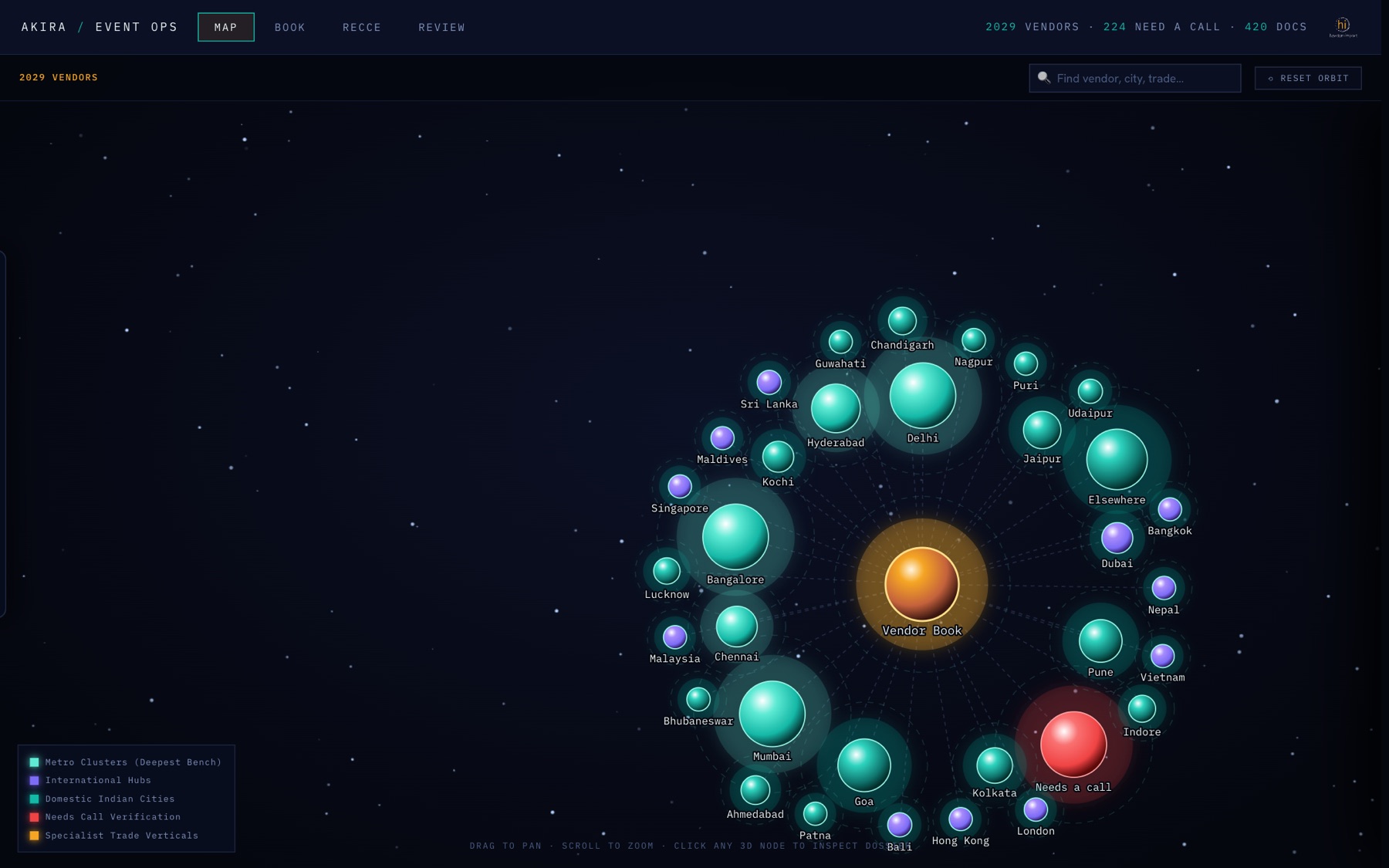
These are real screens from the Akira system that runs our agency work every day. They are not mock-ups.
Real screens

What Akira does
Brief to pitch deck
Turns a client brief into a draft pitch deck for the team to review.
Vendor quotes and memory
Keeps vendor quotes and past prices in one place, so costing starts from real numbers.
Inbox and follow-ups
Reads the inbox, sorts mail and prepares draft replies. A person sends.
Daily operating loop
Morning briefs, open-loop tracking and automated health checks, every day.
Content and images
Makes images that follow the brand system, and rehearses a pitch against a tough client persona.
Human approval
Money, messages and anything public wait for a person. Akira drafts. People decide.
How it is built
A router sends each job to the right model. Akira runs today on Amazon Bedrock and Google Gemini, with local open models on the agency's own machine. A gated senior reasoning tier is wired for Claude.
The system is built and maintained with Claude Code.
Akira is used every day in live agency operations. We are preparing it for other event and advertising agencies in India. To see it work, write to us.